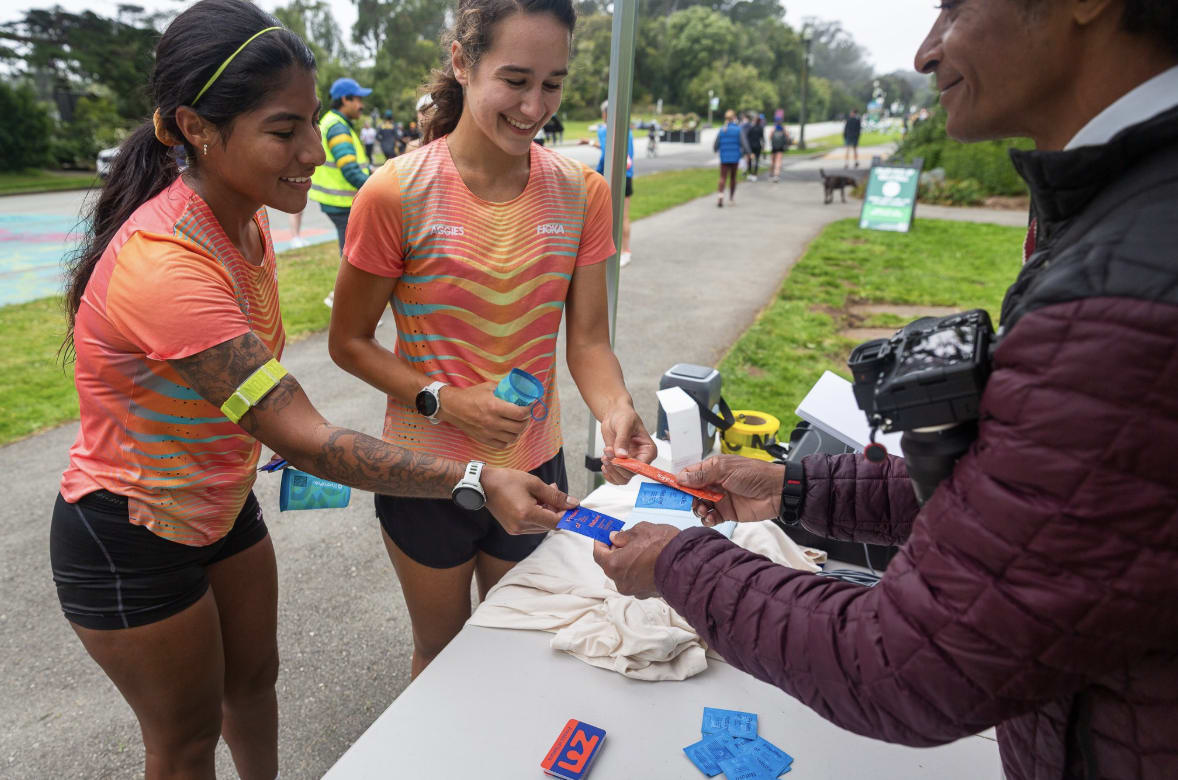
Community-led IRL events are one of the most underused growth engines for wellness and CPG brands. When we show up at a community-run run, a fitness festival, or a charity walk, we meet people in the exact context where our products naturally fit into their lives. The audiences are higher intent, engagement is deeper, and word-of-mouth spreads quickly because people are already primed to talk about performance, recovery, wellness, and daily routines.
Yet the reality on the inside is often frustrating. Teams pour hours into spreadsheets, one-off sponsorships, and last-minute logistics, only to walk away with fuzzy results and little clarity on what actually worked. It feels like a channel that should be powerful, but is stuck in a high-effort, low-measurability loop.
From our vantage point at RunReach, we see the same seven growth barriers repeat across brands of every size. The good news is that a modern IRL marketing platform can remove many of these barriers and turn community activation into a predictable, scalable channel, instead of a side project that never quite lives up to its promise.
The Hidden Barriers Holding Back Community Activations
Barrier 1: Fragmented Event Discovery and Vetting
Most teams still discover events in painfully manual ways. Someone on marketing spends hours Googling local races, scrolling social feeds, asking around in group chats, building ad hoc spreadsheets of dates, contacts, and sponsorship options. Every season, the process starts again from scratch.
That fragmentation leads to uneven coverage and guesswork. One market might over-index on big, flashy races while missing smaller events with better audience fit. Another market might keep going back to familiar organizers, even when the crowd is not right for the brand. Budget ends up scattered across events that look good on paper but do not actually move the needle.
Centralizing discovery changes that dynamic. When we have standardized event data in one place, such as audience size, typical demographics, community vibe, and a history of sponsor performance, planning stops being reactive. Instead of chasing whatever pops up in a search, teams can build a strategic calendar around the right mix of events and formats.
Barrier 2: Unclear Audience Quality and Brand Fit
Labels like "runners" or "active consumers" are too broad to guide smart investment. A competitive half marathon with serious age-group athletes is a very different environment from a community 5K that attracts families and casual walkers. Both can be valuable, but not for the same products or messages.
When audience detail is missing, brands fall into common traps. They choose events only because they are large, have prestige, or come with a friendly organizer relationship. Then they discover that the crowd skews too young for their price point, or too casual for their performance positioning, or simply not interested in their category at all.
With better audience insights, we can segment by lifestyle and intent. For example, we might group events by whether they attract performance-focused athletes, holistic wellness seekers, new-to-fitness participants, or community-focused families. That lets us adjust sampling tactics, creative, and offers, so the same product feels relevant in very different contexts.
Barrier 3: Operational Chaos at Scale
Running one or two local activations is one thing. Scaling to dozens or hundreds of events across markets is something else entirely. Every event has contracts, logistics, permits, staffing plans, signage, compliance requirements, and sample inventory considerations. Spread that across multiple cities, and operational chaos hits fast.
Ad hoc processes are usually the culprit. Each field marketer builds their own playbook. Each agency partner has a different way to ship, staff, and report. Small teams end up buried in email threads, last-minute FedEx runs, and scramble-mode problem solving, which creates burnout and prevents the brand from testing new ideas.
A centralized IRL marketing platform allows brands to standardize workflows, templates, checklists, and vendor coordination. When everyone is working from the same core playbook, it becomes realistic to scale from a few events to many without losing quality or overwhelming the team.
Fixing Data, Consistency, and Community Relationships
Barrier 4: Limited On-Site Data Capture and Attribution
For many brands, the biggest pain point is that community events do not connect clearly to business outcomes. A race might "feel great," but how many qualified leads did it generate? Did those samples lead to trial, purchase, subscription, or repeat orders?
Old-school tactics rarely answer those questions. Paper waivers get shoved in folders. Business cards get lost. QR codes send people to generic landing pages with no way to distinguish event visitors from any other traffic. Post-event surveys sit in decks with no downstream link to actual sales.
Integrated tools for lead capture, offer redemption, and post-event measurement can change this completely. When IRL activations plug directly into CRM and marketing automation, it becomes possible to track who we met, what they engaged with, and how that influenced behavior later.
Barrier 5: Inconsistent Brand Experience Across Markets
When activations span multiple cities or regions, the brand experience can start to splinter. Different local partners or agencies interpret guidelines in different ways. One market has a sleek, educational booth experience; another has a basic table and a few random samples. Messaging shifts, signage varies, and the overall impression of the brand becomes patchy.
This inconsistency does not just affect perception. It also affects learning. If every market runs a different activation, it is almost impossible to compare results in a meaningful way or replicate what worked best.
Shared playbooks and creative asset libraries inside an IRL marketing platform keep local teams aligned without making everything feel cookie-cutter. We can define core activation formats, non-negotiable brand standards, and optional, localized elements so that every event feels like us, adapted thoughtfully to that specific community.
Barrier 6: Under-Leveraged Community Relationships
The power of community-led events is not just the crowd, it is the leaders who bring that crowd together. Event organizers, coaches, club leaders, and local influencers often have deep trust with their communities. Yet many sponsorships are still purely transactional: logo on a banner, a mention in an email, and a booth.
When we treat these relationships as one-offs, we miss longer-term opportunities. These partners can introduce our products repeatedly, share education and training content, and normalize us as part of their community's routine.
Brands can start thinking in terms of ongoing programs rather than single events. For example, offering ambassador kits for run clubs, recurring sampling at weekly meetups, or content that community leaders can share across their channels. These recurring touchpoints build familiarity and trust in a way that one big race weekend cannot match alone.
From One-Off Events to a Learning System
Barrier 7: Lack of Reliable Benchmarks and Learning Loops
Many teams still treat each event as a one-off. Afterward, there is a recap deck, a few photos, some anecdotes, and maybe a subjective sense of whether the event felt "worth it." There is less clarity around what performance really means by event type, market, or product category.
Without standardized performance data such as samples-to-trials, trials-to-purchases, cost per qualified lead, or retention for event-acquired customers, it is hard to justify budget or optimize the mix. Decisions default to intuition and habit.
Aggregating data across hundreds of activations inside an IRL marketing platform turns event marketing into a true learning system. Patterns start to emerge about which event formats drive trial, which audiences respond to which offers, and what staffing or creative variables have the biggest impact. That makes it possible to set realistic benchmarks and run intentional test-and-learn cycles season after season.
Turning Community Activation Into a Scalable Growth Channel
When we remove these seven barriers, community-led IRL activations stop being a "nice brand moment" and start functioning as a repeatable growth channel. Discovery becomes strategic, not haphazard. Audience fit is clear, operations are manageable at scale, and on-site engagement flows directly into measurable business outcomes.
A practical next step is to audit your current IRL approach against these barriers:
• Where are you manually searching and guessing on events?
• Where are operations bottlenecked?
• Where is data falling through the cracks?
• Where are community relationships underused?
Even prioritizing one or two changes, supported by a dedicated IRL marketing platform, can shift IRL from a side experiment into a core acquisition and loyalty driver for your brand.
Turn Offline Moments Into Measurable Growth Today
If you are ready to bridge the gap between real-world experiences and digital results, our IRL marketing platform is built to help you do exactly that. At RunReach, we partner with brands to plan, launch, and track in-person campaigns that actually tie back to performance. Tell us about your goals and we will show you how to turn your next activation into a scalable, repeatable growth channel. Have specific questions or a unique use case in mind, just contact us and our team will help you map out the right approach.