
When I joined AG1, the mandate wasn’t “optimize ads.”
It was:
Build something unconventional. Build something meaningful. Bend the curve.
The company already had:
Paid social
Influencers
Referral programs
Performance channels
They worked.
But they were crowded.
And crowded channels get expensive.
So I started asking a different question:
Where does trusted attention actually live today?
And the answer wasn’t on a screen.
It was at 7:00am.
At the starting line of a half marathon.
At a 6:15pm run club.
Inside a HYROX training session.
On a Saturday long run.
At my weekly outdoor Yoga class with “Nama-Steve”.
That’s when it clicked.
The Modern Public Square Is Not the Bar. It’s the Starting Line.
People are drinking less.
Going out less.
Spending more time in fitness communities.
Run clubs are exploding.
Endurance events are growing.
IRONMAN races are selling out.
5Ks and half marathons are social glue.
These are not passive audiences.
They are:
Recurring
Identity-driven
High-trust
High-intent
If you could design a channel inside those environments that was measurable and repeatable, you’d have something very different from an ad.
You’d have embedded trust.
The First Test
Instead of buying impressions, we did something simple.
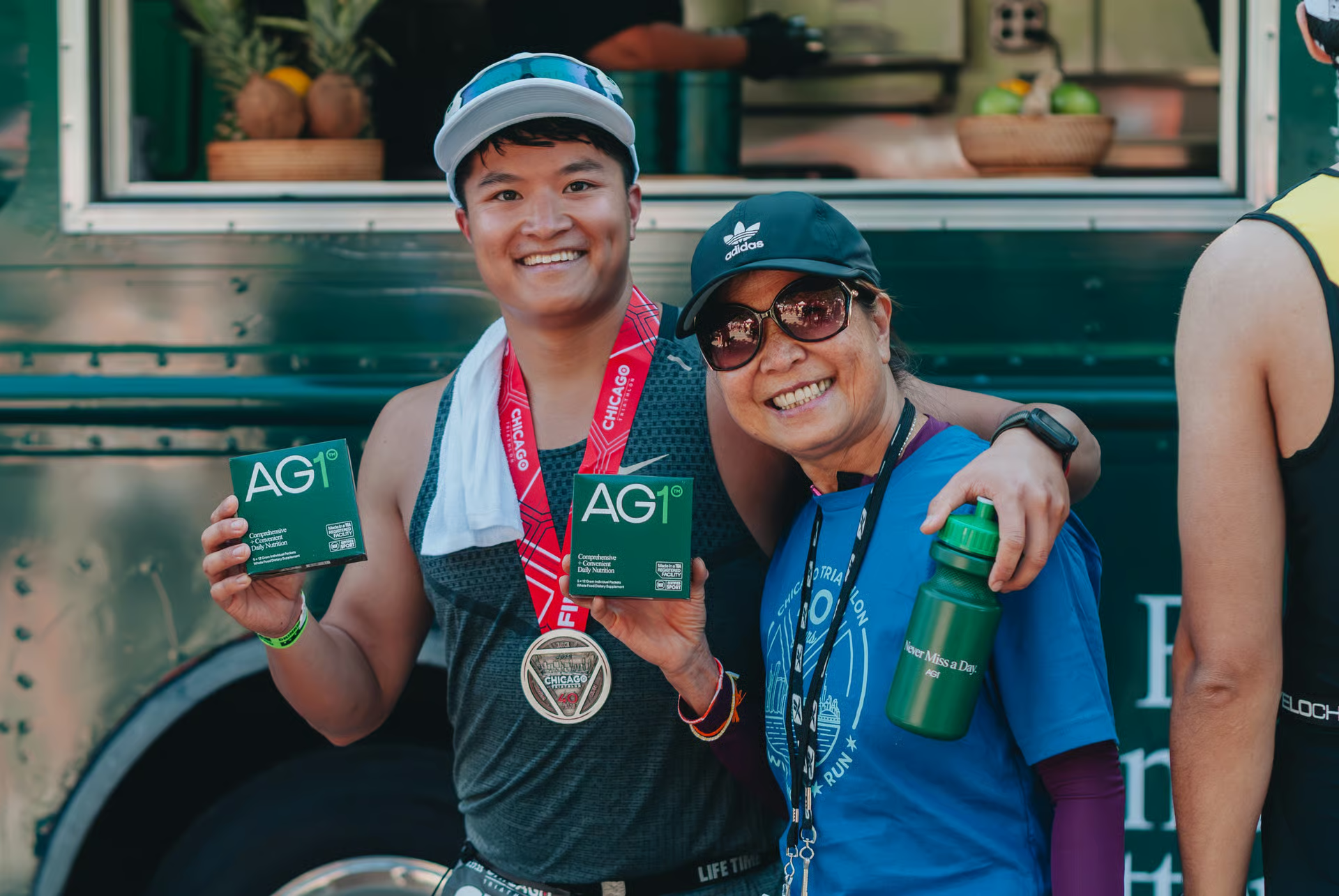
We activated inside fitness communities and race environments.
We:
Distributed samples in trusted contexts
Printed physical QR cards with our best new customer offer
Created unique QR codes per activation
Tracked every purchase tied to each specific event
Not just fuzzy awareness metrics.
No siloed “brand lift studies.”
Clean, measurable attribution.
Within a year:
Hundreds of new customers per week
Growing week over week
Eventually ~5% of total weekly new customers
CAC ~50% lower than average channel
LTV:CAC around 5:1
That’s when I knew this wasn’t a tactic.
It was a channel.
Why It Actually Worked (And Why Most Brands Get This Wrong)
Most brands think race sponsorship equals:
Logo.
Banner.
Booth.
Hope.
That is not what drives acquisition.
Here’s what actually moved conversion.
1. Trial removed friction
A lot of people:
Had heard of AG1
Were curious
Hesitated on taste or skepticism
Didn’t want to commit to a subscription blindly
Sampling inside a trusted environment bridged that gap.
We heard it constantly:
“I’d been thinking about it for months.”
“I wasn’t sure about the taste.”
“Trying it made the difference.”
Trial in isolation helps.
Trial inside a trusted community multiplies.
2. The holistic package mattered more than the discount
Discounts alone don’t convert.
What converts is a cohesive experience.
We layered:
Sampling
Physical QR cards
Strong offer
Signage
Branded gear
Digital reinforcement when appropriate
The discount was not the hero.
The environment was.
The trust was.
The repetition was.
The CTA worked because the brand felt legitimate and present.
3. Full funnel, not just bottom funnel
This was not coupon spam.
We were running full-funnel activations:
Top of funnel:
Digital inclusions from the organizer
Branded gear creating repeated impressions
Middle funnel:
Sampling
In-person education
Community endorsement
Bottom funnel:
Unique QR codes
Clear offer
Trackable conversions
And we did it repeatedly in the same communities.
Frequency compounded results.
The Morning Run Club Moment
There was one activation in Charlotte with Morning Run Club that made everything obvious.
High energy.
Strong turnout.
Samples distributed.
QR cards in hand.
Incredible photography.
Tons of UGC.
Real signups.
They called it their best activation.
And we barely had to lift a finger operationally.
That’s when it became clear:
This could scale.
But Here’s the Hard Truth
This channel looks simple.
It’s not.
To do it well, you must:
Source and vet events
Negotiate sponsorships
Print and ship materials
Manage product and gear logistics
Verify execution
Track performance cleanly
Prevent abuse
Maintain relationships
Know which events convert
Know where to push harder
Follow up consistently
At one point I was personally printing custom QR cards because even small improvements in execution increased partner performance.
This is not glamorous work.
It is infrastructure work.
Most brands try one or two race sponsorships.
They never build the system.
So they never see the channel.
Why It Was CAC Efficient
The efficiency didn’t come from “cheap.”
It came from structure.
Trusted environment
Trial reducing friction
Physical CTA capturing intent
Repeated exposure building familiarity
Clean attribution validating ROI
When you combine all of that, you’re not buying attention.
You’re embedding inside it.
And that’s why CAC was ~50% lower than average and LTV:CAC was strong.
The Realization
After watching this grow for a year, something became obvious:
Brands are flooding into fitness communities.
But most are:
Doing one-off sponsorships
Not measuring properly
Not standardizing activations
Not building repeatable systems
Burning time and budget inefficiently
The opportunity wasn’t “do more sampling.”
The opportunity was:
Build the infrastructure layer.
Why RunReach Exists
RunReach productizes what used to require:
A full internal team
Manual workflows
Custom negotiation per event
Disjointed measurement
Endless coordination
We combine:
1. Network
A national network of fitness clubs and events:
5Ks
Half marathons
Large scale races
Community fitness ecosystems
2. Know-how
Years of learnings around:
What motivates organizers
What creative performs
How to design full-funnel packages
How to structure offers that convert
How to make partners excited to promote
3. Technology
A platform that:
Stores event inventory
Standardizes activation packages
Automates communication
Tracks performance
Verifies execution
Prevents fraud
Enables seamless scaling
We don’t just enable sampling.
We build tailored, full-funnel activation systems that combine:
Sampling
Couponing
Signage
Digital placements
Merch
Repeated presence
So brands can drive both awareness and measurable acquisition inside trusted fitness communities.
Quickly.
At scale.
With clean ROI.
The Bigger Shift
Digital ads are easier to produce than ever.
AI is flooding feeds.
Attention is fragmented.
Trust is thinning.
Meanwhile:
Peer-to-peer trust remains strong.
Identity-based communities are growing.
Race-day environments create legitimacy.
Physical presence builds familiarity in a way pixels don’t.
The brands that win over the next decade won’t just buy impressions.
They will embed themselves inside communities that already command trust and measure the results.
That’s what we built at AG1.
That’s why RunReach exists.